
A Secret Proposal Crosses the Atlantic
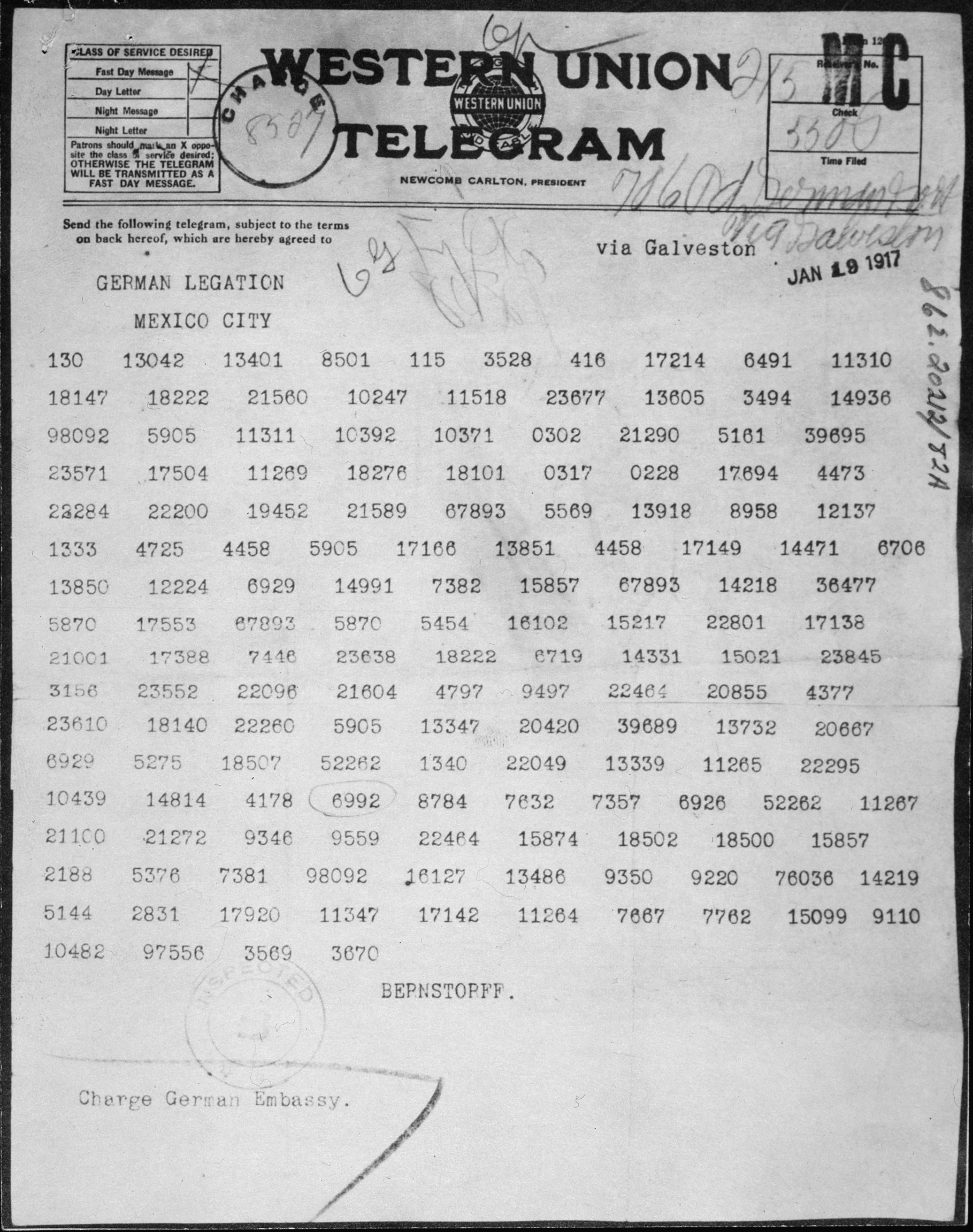
On January 16, 1917, German Foreign Secretary Arthur Zimmermann sent a coded cable to Count Johann Heinrich von Bernstorff, Germany's ambassador in Washington, with instructions to forward its contents to Heinrich von Eckardt, the German minister in Mexico City. The message told Eckardt that Germany intended to resume unrestricted submarine warfare on February 1 and expected this might draw the United States into the war. In that event, Germany proposed an alliance with Mexico.
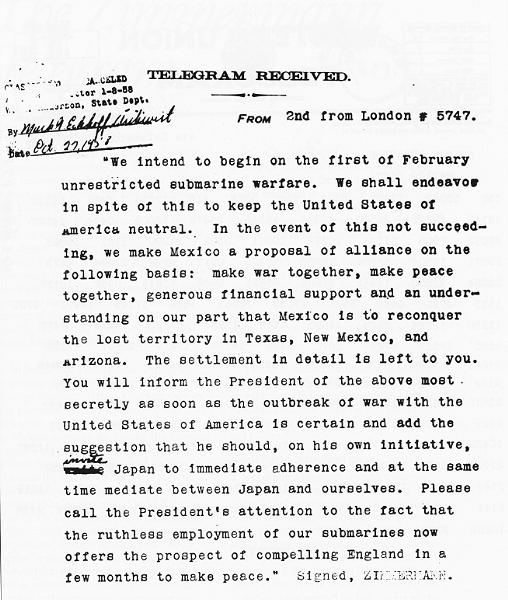
The decoded text, later entered into the US diplomatic record, reads in part: "We make Mexico a proposal of alliance on the following basis: make war together, make peace together, generous financial support and an understanding on our part that Mexico is to reconquer the lost territory in Texas, New Mexico, and Arizona." Zimmermann also instructed Eckardt to suggest that Mexico's president invite Japan to join the arrangement, and to relay that unrestricted submarine warfare offered "the prospect of compelling England in a few months to make peace."
The cable traveled by a genuinely roundabout path. Part of it moved over a Swedish diplomatic cable link (the so-called "Swedish roundabout"), and part moved over an American State Department telegraph channel that President Woodrow Wilson had, somewhat ironically, allowed Germany to use in Berlin for transmitting peace-related communications to Washington. Both routes ran through cables that British intelligence could tap.

Room 40: Breaking Germany's Codes
The intercept landed on the desks of Room 40, the Admiralty's codebreaking section housed in the Old Building of the British Admiralty in London. By 1917 Room 40 had spent more than two years working against German diplomatic and naval ciphers, aided by captured codebooks, including one recovered from the German cruiser SMS Magdeburg in 1914 and material seized from a German consul's luggage in Persia. Cryptographers Nigel de Grey and the Reverend William Montgomery did the core work of unpicking the Zimmermann cable, with de Grey producing a partial decode within a day of the intercept and the pair completing a fuller version by January 17.
Germany had recently begun using a newer diplomatic code, numbered 0075, which Room 40 had only partially reconstructed. Zimmermann's message to Bernstorff went out in that newer code. But when Bernstorff retransmitted the relevant portion on to Eckardt in Mexico City, he recoded it into an older cipher, numbered 13040, that Room 40 had already broken months earlier. That retransmitted, older-code version, not the original, was the copy Britain would eventually be able to reveal, because releasing it risked exposing a cipher Germany already suspected was compromised, rather than the newer one Room 40 was still exploiting.
A Diplomatic Tightrope: Exposing the Plot Without Exposing the Source
Admiral William Reginald "Blinker" Hall, the director of naval intelligence who ran Room 40, faced a genuine dilemma once the decode was in hand. Simply handing Washington a British-decrypted German cable would tell both the Americans and the Germans that Britain was reading traffic carried over the US State Department's own cable network, including, awkwardly, the "peace channel" Wilson had personally authorized for Berlin's use. That risked a serious rupture with Washington and would certainly prompt Germany to change its codes, shutting off a vital intelligence source.
Hall's solution was to obtain a second, independent-looking copy of the telegram. He arranged for an agent in Mexico City, referred to in British records only as "Mr. H," to acquire the retransmitted cipher text of the telegram from the commercial telegraph office there, reportedly with the help of a bribed clerk. This gave Britain a version of the message that could plausibly be described as obtained inside Mexico, letting Hall conceal the fact that Room 40 had been intercepting cables routed through American diplomatic channels.
With that cover story in place, Hall showed the decoded telegram to Edward Bell, a secretary at the American Embassy in London, on February 19, 1917. Days later, on February 23, British Foreign Secretary Arthur Balfour formally handed the coded text, the German-language decode, and an English translation to US Ambassador Walter Hines Page. Page cabled the contents to Washington, and President Wilson, described by aides as reacting with considerable indignation, received the news on February 24. Wilson held the explosive material for several days before releasing it to the press on March 1, 1917, through the Associated Press.
Zimmermann Confirms It Himself
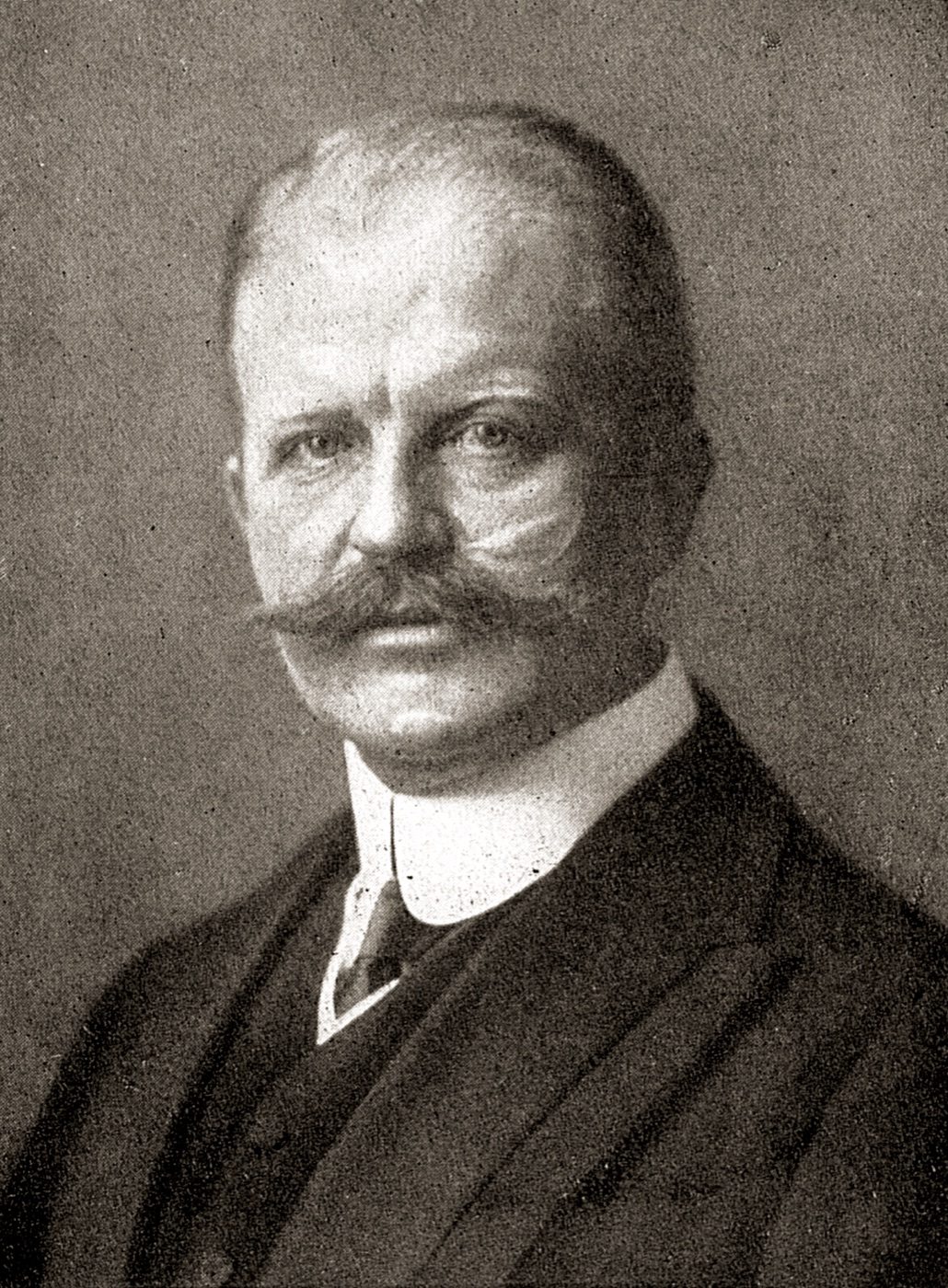
Publication triggered immediate skepticism. Anti-war voices, including papers in the Hearst chain, suggested the telegram was a British forgery designed to manipulate the United States into the war, and German-American and Irish-American communities were especially inclined to doubt it. The doubts did not last. On March 3, 1917, at a press conference in Berlin, William Hale, a correspondent for Hearst's International News Service, asked Zimmermann directly whether he would deny the story. Zimmermann answered: "I cannot deny it. It is true."
Zimmermann repeated and elaborated on the admission before the German Reichstag on March 29, 1917, confirming the substance of the telegram while objecting to the manner in which Germany believed it had been obtained. His public confirmation instantly resolved the authenticity question that Wilson's administration could not settle on its own without revealing British codebreaking methods, and it removed the last major argument anti-interventionist voices had against the telegram's significance.
.png)
From Outrage to a Declaration of War
American newspapers reacted with fury once Zimmermann's confirmation removed any doubt. The Chicago Tribune reported that the news "fell like a thunderbolt upon official Washington," and other papers condemned what the Associated Press called part of "Germany's worldwide plan for stirring strife on every continent." The proposal to hand Texas, New Mexico, and Arizona to Mexico struck a particular nerve, turning a war many Americans still saw as a distant European quarrel into a scheme aimed at US territory.
The telegram did not act alone. It landed amid Germany's resumption of unrestricted submarine warfare on February 1, 1917, which had already begun sinking American ships and killing American citizens by the time the telegram broke in the press. The combination of the two, a direct military threat at sea and a plot to arm an enemy on the southern border, proved decisive. On April 2, 1917, Wilson asked a joint session of Congress for a declaration of war, and on April 6, 1917, Congress obliged, formally bringing the United States into World War I. WarCrumbs' other codebreaking-and-intelligence pieces, on the Navajo code talkers and the Gulf of Tonkin incident, are collected in the Codebreaking & Intelligence hub.