.png)
The Machine-Gun Math That Killed the Frontal Charge
When the armies of 1914 marched to war, their doctrine still assumed a determined infantry charge, backed by artillery, could break almost any defensive line, much as it had for a century. Many of the men in those ranks had been persuaded into uniform only weeks earlier by recruitment poster campaigns that blanketed Britain with millions of printed copies, not the static grind that actually followed. Two industrial-age weapons made that assumption fatal almost overnight: the quick-firing field gun and the belt-fed machine gun. A heavy machine gun such as the German Maxim or the British Vickers could sustain 400-600 rounds a minute, and the German army's own assessments rated a single gun's firepower as roughly equal to that of 80 riflemen. A pair of well-sited guns with pre-registered fields of fire could cover the entire front of an advancing infantry battalion. The French infantry among them still wore the red trousers France refused to change until the dye ran out. Battlefield doctrine often only changes after a disaster proves the old assumptions wrong: rules of engagement governing when U.S. troops may actually open fire didn't get a unified rewrite until 1994, after both an under-armed Marine barracks in Beirut and an over-cautious Navy warship in the Persian Gulf had already paid for the gap in blood.
The arithmetic of actually crossing that ground was brutal. An attacking line moving at a walking pace across No Man's Land, typically 90 to 275 meters (100-300 yards) of open ground on the Western Front, narrowing to just 25 meters at Vimy Ridge, spent minutes fully exposed to fire. Preliminary artillery bombardments, meant to cut barbed wire and kill defenders in advance, routinely failed at both jobs: shells sank into soft ground without detonating, wire ended up tangled and uncut, and defenders sheltering in deep dugouts simply climbed back to their firing step the moment the barrage lifted. The result showed up in the casualty ledgers, not on the map: at the Battle of the Somme, after roughly five months of fighting and about one million combined Allied and German casualties, the British front line had advanced approximately six miles. That math made digging in the rational response; a soldier below ground level survived a bombardment that would kill him standing in the open.
Anatomy of a Trench System: Fire Bays, Traverses, and the Zigzag
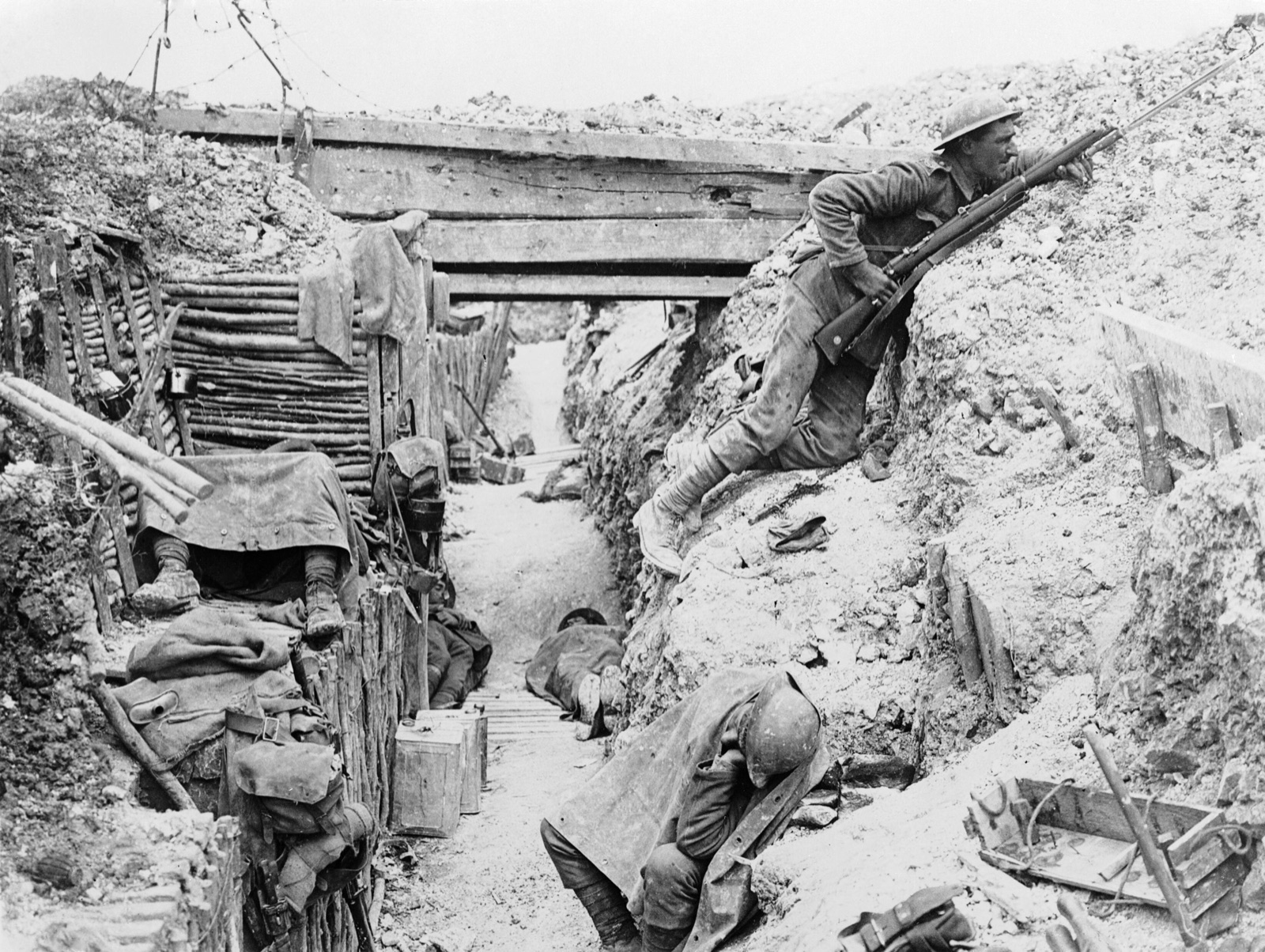
A "trench" on the Western Front was never a single ditch; it was a defense-in-depth system of at least three parallel lines. The front-line fire trench, where sentries watched No Man's Land and riflemen fired from a raised step cut into the forward wall, sat roughly 200-300 yards ahead of a support trench, itself another 200-300 yards ahead of a reserve trench. Communication trenches, dug at an angle to the front line, never running parallel to it, connected all three, letting runners, ration parties, and reinforcements move up and down without ever showing themselves above ground level. By 1916 this network, dug by both sides, stretched for roughly 475 miles from the English Channel to the Swiss frontier, and a well-built section needed to be at least 8 feet (2.5 meters) deep so a man could walk it upright and still be protected.
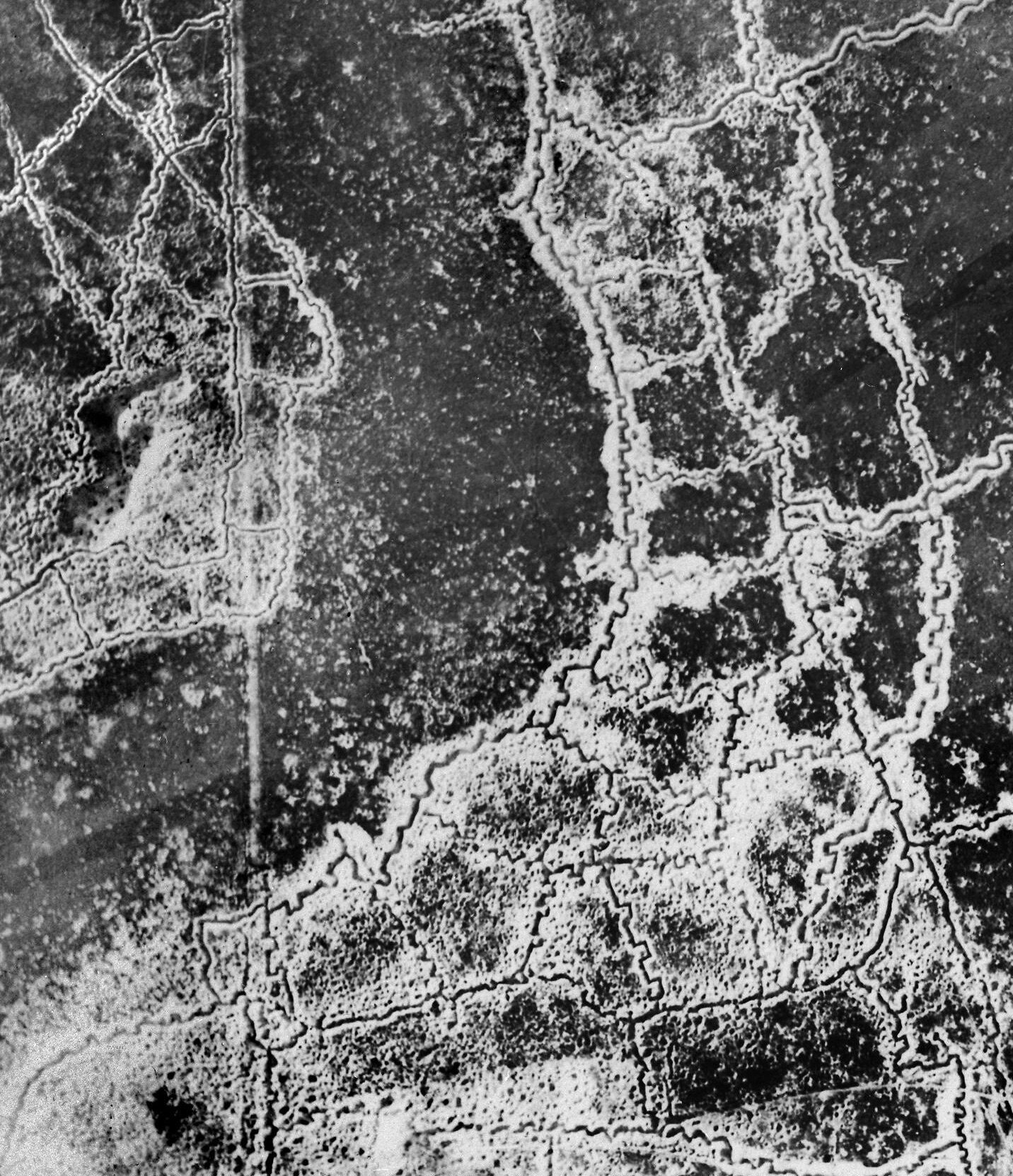
None of these trenches were dug straight, and that was deliberate rather than accidental. Seen from above, a properly built trench zigzagged constantly, broken into short "fire bays" separated by angled jogs called traverses. The reason was pure damage control: a straight trench let a single shell landing inside it, or a machine gun that found the right angle, sweep the entire line with blast, shrapnel, or enfilade fire in one burst. A zigzag pattern meant a shell or bullet stream that entered one bay was blocked by the earth-and-sandbag wall of the next traverse, containing the damage to a few yards and sparing the rest of the line. Trench construction itself was a permanent, ongoing labor operation, never a one-time project; British Army guidelines specified that a work party of 450 men needed roughly six hours of night digging to complete about 250 meters of front-line trench.

Life and Death in the Line: Mud, Rats, and Trench Foot
Static occupation of waterlogged ground for months at a time produced its own casualty lists, separate from combat. Standing constantly in cold water and mud restricted blood flow to the feet, and the resulting condition, trench foot, could progress to gangrene and require amputation if left untreated. British Army medical records show more than 20,000 cases in the first winter of the war alone (1914-15), and 74,000 recorded cases across the entire conflict, a figure the Western Front Association notes was almost certainly an undercount: neglecting one's feet was a punishable offense in many units, which discouraged soldiers from reporting the condition at all.
The trenches' constant supply of food scraps, waste, and unburied dead created ideal conditions for rats, which soldiers on both sides described in strikingly similar terms. Machine gunner George Coppard, who served through the Somme and later wrote the memoir 'With a Machine Gun to Cambrai' (1969), recalled that "there was no proper system of waste disposal in trench life... millions of tins were thus available for all the rats in France and Belgium in hundreds of miles of trenches." Harry Patch, the last surviving British veteran of the war, put it more bluntly in Max Arthur's 2005 oral-history collection 'Last Post': "There were rats as big as cats, and if you had any leather equipment the damn things would gnaw at it."
Breaking the Stalemate: Tanks, Combined Arms, and Stormtroopers
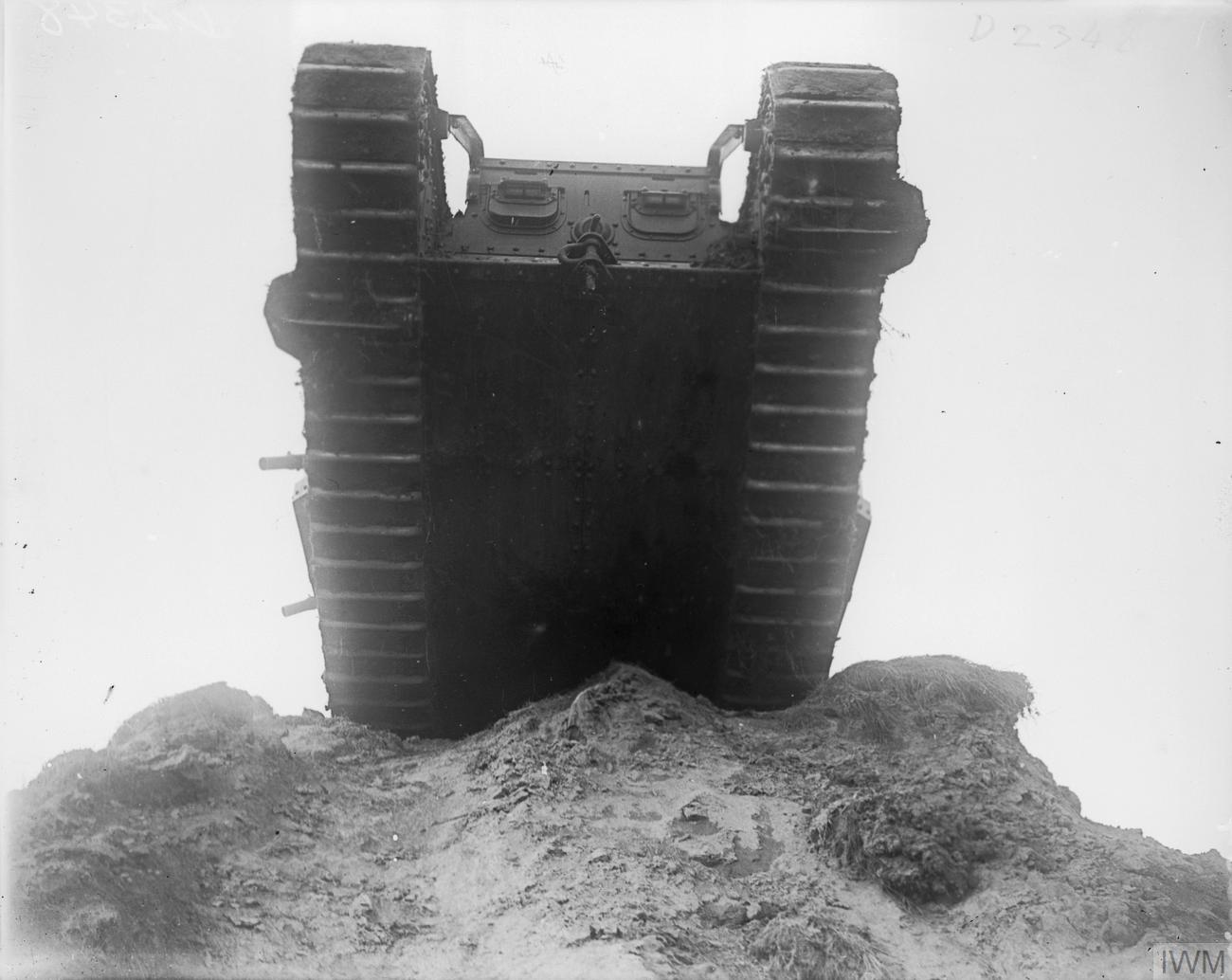
The tactical answer to trench deadlock arrived from both sides of the line within about a year of each other. At the Battle of Cambrai in November 1917, the British attacked with roughly 470 tanks alongside coordinated infantry, artillery, and aircraft, and, critically, without the days-long preliminary bombardment that had always warned defenders an attack was coming. Guns were registered on their targets using sound-ranging and survey data instead of ranging shots fired in advance, so the barrage and the tank assault arrived together as a genuine surprise. The attack tore an 8-kilometer hole in the supposedly impregnable Hindenburg Line on the first day, though German counterattacks recovered most of the ground within two weeks, the breakthrough was tactically real but not yet logistically sustainable. Fifty years later, a different war's targeting decisions were made even further from the battlefield: Operation Rolling Thunder's weekly target list against North Vietnam was picked not by field commanders but at an informal White House lunch that, by one participant's own account, included no professional military officer until late 1967.
The German army answered on the offensive with a different solution: infiltration tactics, associated with officers including Oskar von Hutier and refined by artillery specialist Georg Bruchmüller's short, intense "creeping barrage." Rather than sending waves of infantry against intact strongpoints, specially trained assault detachments, the Stoßtruppen, or "stormtroopers", advanced fast in small squads, bypassing strongpoints entirely to push into the enemy's rear and leaving isolated pockets of resistance for heavier infantry to mop up afterward. In the March 1918 Spring Offensive, this let a single German army advance more than 50 kilometers in under a week, the deepest advance either side had made on the Western Front since 1914. It still could not win the war outright: stormtrooper units couldn't carry enough supplies to sustain the advance on their own, and it was the Allies' combined-arms method from Cambrai, tanks, aircraft, and artillery moving together with infantry, used at scale in the Hundred Days Offensive, that proved durable enough to end the war by November 1918.